The Experiment of Reviving a Century-Old Brand: How to Truly Engage with Generation Z?

Aug 21, 2025 By

In an era where consumer attention spans are shrinking and brand loyalty is increasingly elusive, century-old companies face a unique challenge: how to remain relevant to Generation Z without alienating their core customer base. The pursuit of youthfulness has become something of an obsession for legacy brands, yet many stumble in their attempts to connect with this digitally-native, values-driven demographic. The question isn't whether heritage brands should adapt—it's how they can do so authentically, without appearing desperate or disingenuous.

Generation Z represents the first truly digital-native generation, having never known a world without smartphones, social media, or instant access to information. This technological immersion has fundamentally shaped their expectations, behaviors, and values. They're skeptical of traditional advertising, adept at spotting inauthenticity, and increasingly make purchasing decisions based on a brand's ethical stance and social impact. For heritage brands accustomed to communicating through carefully crafted campaigns and controlled messaging, this represents a seismic shift in how they must approach marketing and brand building.

The most successful heritage brands understand that youthification isn't about slapping trendy graphics on old products or hiring the latest TikTok star for a campaign. It requires a fundamental rethinking of how the brand shows up in the world—from product development and marketing to corporate social responsibility and customer experience. It's about finding the intersection between what the brand stands for and what matters to younger consumers, then building genuine connections around those shared values.

Product innovation represents one of the most effective ways for heritage brands to capture Gen Z's attention. Rather than simply updating packaging or launching limited edition collaborations, forward-thinking companies are reimagining their core offerings to meet the evolving needs and preferences of younger consumers. This might involve developing sustainable versions of classic products, incorporating technology in meaningful ways, or creating customizable options that allow for personal expression. The key is maintaining the quality and heritage that made the brand iconic while making it relevant to contemporary lifestyles.

Brand storytelling takes on new importance when targeting Generation Z, who crave authenticity and transparency above all else. Heritage brands possess a distinct advantage here—they have decades or even centuries of history to draw upon. The most effective approaches involve telling real stories about the brand's origins, craftsmanship, and evolution, rather than creating fictional narratives. These stories must be shared through the channels where Gen Z spends time, using formats and language that feel native to those platforms while remaining true to the brand's voice.

Social media presence requires more than simply maintaining accounts on popular platforms. Gen Z expects brands to participate meaningfully in digital culture, which means understanding platform-specific norms, creating content that adds value to users' feeds, and engaging in two-way conversations rather than broadcasting messages. The most successful heritage brands on social media demonstrate personality, humor, and humility—they don't take themselves too seriously while still respecting their legacy. They also understand that different platforms serve different purposes, tailoring their content strategy accordingly.

Corporate social responsibility has evolved from a nice-to-have to a must-have for brands targeting Generation Z. This demographic expects companies to take stands on social and environmental issues and to back up their statements with concrete action. For heritage brands, this represents both a challenge and an opportunity. Many have long-standing philanthropic initiatives or sustainable practices that simply haven't been communicated effectively. The brands that succeed with Gen Z are those that integrate purpose into their business model rather than treating it as a separate initiative, and that demonstrate progress transparently, even when they fall short of perfection.

Collaborations with contemporary artists, designers, and even other brands can provide heritage companies with fresh perspectives and access to new audiences. However, these partnerships must feel organic rather than forced. The most successful collaborations occur when both parties share complementary values and aesthetics, resulting in products or campaigns that feel like a natural extension of both brands. These partnerships should bring something new to the table rather than simply borrowing credibility from the collaborator.

Employee diversity and inclusion represent another critical factor in authentic youthification efforts. Generation Z is the most diverse generation in history, and they expect the brands they support to reflect that diversity not just in marketing materials but throughout the organization. Heritage brands must examine their hiring practices, company culture, and leadership representation to ensure they're building teams that understand and can authentically connect with diverse young consumers. This internal work often proves more important than any external campaign in building genuine relevance.

Customer experience must evolve to meet Gen Z's expectations for seamlessness, personalization, and digital integration. This generation moves fluidly between online and offline channels, expecting consistent service and messaging across all touchpoints. Heritage brands often struggle with legacy systems and processes that create friction in the customer journey. Successful youthification requires investing in technology and training to create experiences that feel modern and effortless while still delivering the quality service associated with established brands.

Perhaps the most important lesson for heritage brands pursuing youthification is that authenticity cannot be faked. Generation Z possesses highly developed radar for pandering or disingenuous attempts to appear cool or relevant. The brands that succeed are those that stay true to their core identity while finding authentic ways to connect with contemporary concerns and culture. They understand that youthification isn't about becoming something they're not, but about rediscovering what made them special in the first place and communicating that in ways that resonate with today's young consumers.

The journey toward meaningful connection with Generation Z requires patience, humility, and willingness to listen and learn. Heritage brands that approach this demographic with respect for their intelligence and values, rather than viewing them simply as a new market to conquer, stand the best chance of building lasting relationships. The companies that will thrive in the coming decades are those that honor their past while boldly embracing the future, creating brands that feel both timeless and timely.

Recommend Posts
Fashion

Luxury Goods Pricing Strategy Unveiled: Is Global Price Uniformity a Myth?

By /Aug 21, 2025

In the hushed ateliers of luxury maisons, where heritage meets haute craftsmanship, a delicate dance unfolds twice yearly—the strategic recalibration of price tags across global markets. While brands like Chanel and Louis Vuitton publicly champion "price harmonization," positioning it as a noble quest for fairness, the reality is far more nuanced. The notion of global price uniformity in luxury goods is, upon scrutiny, a carefully constructed illusion—a marketing masterstroke rather than an operational reality.
Fashion

The Mini Bag Paradox: Why Are Smaller Bags More Expensive and Why Do Consumers Pay Up?

By /Aug 21, 2025

In the world of luxury fashion, a curious phenomenon has taken hold: the smaller the handbag, the heftier the price tag. This trend, often referred to as the "miniaturization paradox," sees consumers willingly spending significant sums on diminutive accessories that offer minimal practical utility. At first glance, this seems counterintuitive. Why would a rational buyer invest in an object that holds little more than a lipstick and a credit card when a larger, more functional alternative exists at a lower cost? The answer lies not in the realm of logic, but in the complex interplay of desire, identity, and perceived value that defines modern luxury consumption.
Fashion

Why Knitted Vests Become the All-Season Layering Essential?

By /Aug 21, 2025

In the ever-evolving landscape of fashion, few garments have demonstrated the versatility and enduring appeal of the knit vest. Once relegated to preppy aesthetics or corporate dress codes, this humble piece has undergone a remarkable transformation, emerging as a true layering hero for all seasons. Its journey from a supplementary item to a wardrobe staple is a testament to its unique ability to bridge stylistic gaps and adapt to fluctuating temperatures with effortless grace.
Fashion

Mary Jane's Triumph: A Century-Long Journey from Children's Shoes to a Fashion Icon

By /Aug 21, 2025

In the vast tapestry of fashion history, few items have undergone as remarkable a transformation as the humble Mary Jane shoe. What began as a practical, child-friendly design has, over the course of a century, evolved into a versatile and enduring symbol of style, nostalgia, and rebellion. Its journey from the playground to the runway is a fascinating story of cultural shifts, technological advancements, and the cyclical nature of trends.
Fashion

The Rebirth of Wide-Shouldered Suits: How the Symbol of Power Became Soft?

By /Aug 21, 2025

In the hushed ateliers of Milan and the bustling showrooms of New York, a quiet revolution is taking place at the shoulders. The power shoulder, that formidable architectural element synonymous with 1980s corporate ambition and unapologetic authority, is being meticulously deconstructed. The broad-shouldered suit, once a rigid uniform of command, is being reborn. Its re-entry into the fashion lexicon speaks to a profound cultural shift: a recalibration of what power looks, and more importantly, feels like in the contemporary world.
Fashion

The Revival of the Shirt Dress: Multiple Personalities Interpreted by a Single Item

By /Aug 21, 2025

The shirt dress, once relegated to the utilitarian corners of the wardrobe, has staged a remarkable and multifaceted comeback. No longer a mere relic of a bygone era's practicality, it has been reimagined, recontextualized, and reborn as a chameleon of modern style. Its revival speaks to a collective desire for versatility, comfort without compromise, and a piece that can truly tell a story, adapting its character to the whim of its wearer.
Fashion

The Fashion in Bookstores: The Revival and Commercial Value of Intellectual Attire

By /Aug 21, 2025

In the hushed aisles of bookstores, a quiet sartorial revolution is taking place. The once-dusty aesthetic of the intellectual, long confined to academic journals and black-and-white photographs of literati, is experiencing a remarkable and commercially potent renaissance. This is not merely a trend but a full-blown cultural movement, where the uniform of the thinker—tweed blazers, well-worn corduroys, oversized spectacles, and leather satchels brimming with paperbacks—has been extracted from the archives and thrust into the spotlight of mainstream fashion. The bookstore itself has become the unlikely runway, a curated space where this aesthetic is not only consumed intellectually but also sartorially, creating a powerful nexus between commerce and culture.
Fashion

Urban Style Spectrum: A Report on the Differences in Street Fashion between Shanghai, Chengdu, and Beijing

By /Aug 21, 2025

In the sprawling urban landscapes of China, fashion serves as a visual dialect, a non-verbal language spoken through fabric, cut, and color that reveals the distinct personality of each metropolis. The sartorial choices seen on the streets of Shanghai, Chengdu, and Beijing are not merely about individual taste; they are profound reflections of each city's history, economic pulse, cultural priorities, and overall zeitgeist. To walk through these cities is to read three different chapters of a modern style narrative, each telling a unique story of identity and aspiration.
Fashion

Vaccumation Outfitology: The Evolution of Style from the Riviera to Hainan Island

By /Aug 21, 2025

As the golden sun dips below the horizon of the French Riviera, casting a warm glow over the azure waters, one cannot help but marvel at the evolution of resort wear that has journeyed from the chic beaches of the Mediterranean to the tropical shores of Hainan Island. The narrative of vacation dressing is not merely about clothing; it is a reflection of cultural shifts, historical influences, and the ever-changing desires of the modern traveler. What began as a rigid, formal attire for the elite has blossomed into a vibrant, expressive, and deeply personal style language that transcends continents and climates.
Fashion

After Old Money Style": "Intellectual Style" Becomes the New Aesthetic Benchmark?

By /Aug 21, 2025

In the ever-evolving landscape of fashion and aesthetics, trends emerge and recede with the subtlety of seasonal shifts. For years, the "Old Money" aesthetic held sway, championing a look of understated luxury, timeless elegance, and a whisper of inherited wealth. It was a style defined by crisp polo shirts, well-tailored blazers, and a palette of neutrals that spoke of quiet confidence rather than loud consumption. But as the cultural conversation pivots, a new contender has risen, not from the vaults of generational wealth, but from the libraries and lecture halls: the rise of the "Intellectual Chic," or what many are now calling the "Cerebral Aesthetic."
Fashion

How Football Culture Reshapes Haute Couture: The Style Migration from the Pitch to the Runway

By /Aug 21, 2025

The relationship between football culture and high fashion has evolved from a distant flirtation to a profound symbiosis, reshaping the very fabric of contemporary luxury design. What was once a clear demarcation—the gritty, communal energy of the stadium versus the exclusive, rarefied air of the atelier—has dissolved into a dynamic cross-pollination. This migration of style, from the terraces to the front row, is not merely about borrowing aesthetics; it is a fundamental reimagining of luxury's codes, values, and audience. Designers are no longer looking down from an ivory tower but are instead drawing inspiration from the global, passionate, and deeply cultural world of football, translating its raw emotion and unifying spirit into collections that speak a new, more accessible language of opulence.
Fashion

Independent Designers' Survival Report: Finding the Balance Between Business and Art

By /Aug 21, 2025

In the ever-evolving landscape of creative industries, the journey of independent designers stands as a testament to both passion and perseverance. A recent comprehensive study, the Independent Designer Survival Report, delves deep into the intricate dance these professionals perform daily—navigating the delicate tightrope between unbridled artistic expression and the pragmatic demands of commercial viability. This report uncovers not just the challenges but also the innovative strategies that define the modern independent design entrepreneur.
Fashion

The Experiment of Reviving a Century-Old Brand: How to Truly Engage with Generation Z?

By /Aug 21, 2025

In an era where consumer attention spans are shrinking and brand loyalty is increasingly elusive, century-old companies face a unique challenge: how to remain relevant to Generation Z without alienating their core customer base. The pursuit of youthfulness has become something of an obsession for legacy brands, yet many stumble in their attempts to connect with this digitally-native, values-driven demographic. The question isn't whether heritage brands should adapt—it's how they can do so authentically, without appearing desperate or disingenuous.
Fashion

The Conscience of Fast Fashion: Exploring Uniqlo's Sustainable Product Line Innovations

By /Aug 21, 2025

In the sprawling landscape of fast fashion, where trends are born and discarded with alarming speed, the conversation around sustainability has shifted from a whisper to a roar. Consumers, increasingly aware of the environmental and social costs of their clothing choices, are demanding more from the brands they support. It is within this charged atmosphere that Uniqlo, the Japanese apparel giant, has carved out a unique and compelling path. Its approach to sustainability is not merely a side project or a marketing afterthought; it is woven into the very fabric of its product innovation strategy, presenting a fascinating case study of what a "conscience" in fast fashion can genuinely look like.
Fashion

The Next Stop of National Trend: How Chinese Designers Redefine Oriental Aesthetics"?

By /Aug 21, 2025

In the bustling streets of Shanghai, a quiet revolution is unfolding within fashion boutiques and design studios. Chinese designers, armed with cultural confidence and global perspectives, are dismantling century-old stereotypes of Oriental aesthetics, weaving ancient philosophy into contemporary silhouettes, and sparking what industry insiders call the "next wave of Guochao." This movement transcends mere revivalism; it is a profound reimagining of Chineseness in a globalized world.
Fashion

The Discreet Innovator: Exploring the Creative Philosophy of Bottega Veneta's New Director

By /Aug 21, 2025

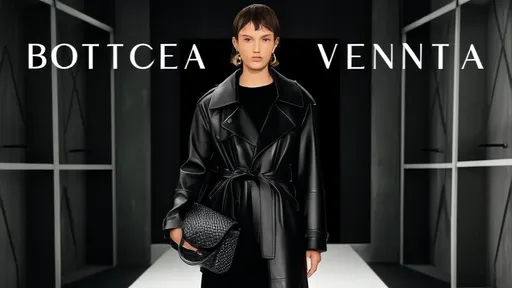
In the hushed corridors of luxury fashion, few appointments have been as quietly anticipated as that of Matthieu Blazy at Bottega Veneta. Stepping into the role following the departure of the charismatic Daniel Lee, Blazy represents not a rupture, but a subtle, profound evolution. His philosophy is not broadcast through loud proclamations or shock-value aesthetics; it is instead woven into the very fabric of the garments, whispered through the intricate intrecciato weave that has long been the house's signature. To understand Blazy's Bottega Veneta is to embrace a narrative of quiet intelligence, where the revolution is felt, not shouted.
Fashion

Sheer Layering: The Art of Tulle and Lining Returns to the Runway

By /Aug 21, 2025

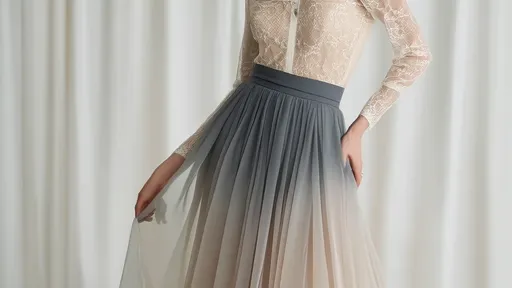
As the lights dimmed on the final runway of Fashion Month, a singular sartorial whisper grew into a resonant declaration: the art of layering through transparency has reclaimed its throne. Designers from Paris to Milan have resurrected the delicate dance between diaphanous fabrics and structured undergarments, crafting collections that celebrate revelation through concealment. This isn't merely a trend revival; it's a philosophical homecoming to fashion's most poetic contradiction.
Fashion

Industrial Style 2.0: How Functional Pockets Conquer High Fashion?"

By /Aug 21, 2025

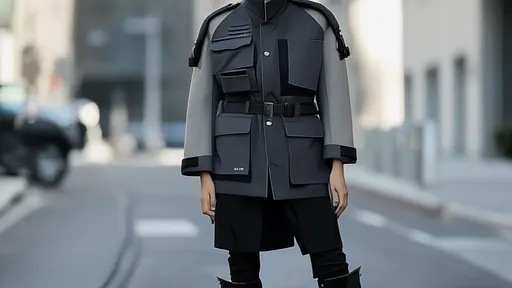
In the ever-evolving landscape of fashion, few trends have demonstrated the staying power and transformative potential of utilitarian workwear. What began as a purely functional approach to clothing for laborers and artisans has, in its latest iteration—dubbed Workwear 2.0—catapulted into the highest echelons of high fashion. At the heart of this sartorial revolution lies an unexpected hero: the functional pocket. No longer a mere afterthought or a hidden seam, the pocket has been reimagined, deconstructed, and elevated into a central design element, conquering runways and redefining luxury in the process.
Fashion

Retro Sports Comeback: 2000s Tennis Style Becomes the New Street Uniform

By /Aug 21, 2025

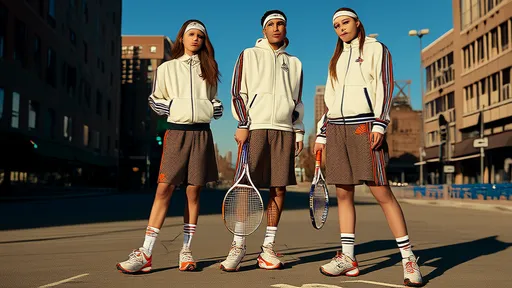
In the cyclical world of fashion, where trends resurface with nostalgic fervor, the latest sartorial revival is serving a distinctly athletic ace. The early 2000s tennis aesthetic, once confined to clay courts and country clubs, has volleyed its way from the baseline to the boulevard, becoming the unexpected but undeniable street style uniform of the season. This isn't merely about athleisure; it's a specific, preppy, and polished iteration of sportswear that speaks to a desire for both comfort and a sharply defined, almost retro-futuristic silhouette. The movement is a cultural callback, a sartorial manifestation of a simpler, yet boldly optimistic, technological and cultural era.
Fashion

New Minimalism: Why is Quiet" Luxury Becoming "Loud"?

By /Aug 21, 2025

In the ever-shifting landscape of consumer aesthetics, a fascinating paradox is unfolding. The very ethos of "quiet luxury," a philosophy built on discretion, timelessness, and an almost whispered declaration of wealth, is itself becoming a topic of loud, mainstream conversation. What began as a sartorial secret handshake among the elite has been amplified, dissected, and commodified, transforming its inherent silence into a resonant cultural echo. This is the story of how the understated became overstated, how a whisper became a roar in the world of new minimalism.