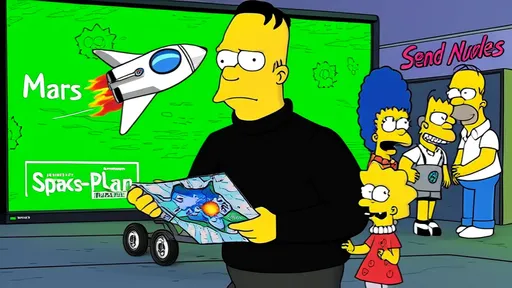
Elon Musk, the visionary behind SpaceX and Tesla, made a memorable appearance on the long-running animated series The Simpsons, voicing himself in an episode that took aim at his ambitious plans for colonizing Mars. The episode, which aired as part of the show's thirty-second season, showcased Musk's willingness to engage in self-parody, blending humor with his characteristic futuristic optimism.
In the episode, Musk arrives in Springfield to unveil a new project, only to find himself entangled in the town's quirky chaos. The storyline cleverly juxtaposes Musk's grand visions with the absurdity of everyday life in Springfield, creating a rich tapestry of satire. The writers did not hold back, poking fun at the feasibility and practicality of Musk's Mars colonization dreams, highlighting the stark contrast between his high-tech aspirations and the mundane problems faced by humanity.
Musk's vocal performance added a layer of authenticity to the caricature. His deadpan delivery of lines that both defended and mocked his own ideas demonstrated a rare ability to laugh at himself. This self-awareness is a trait not often seen in figures of his stature, and it endeared him to audiences and critics alike. The episode managed to balance ridicule with respect, acknowledging Musk's contributions to technology while humorously questioning the realism of his extraterrestrial goals.
The satire extended beyond Musk's Mars plans to touch on broader themes such as corporate influence, technological dependency, and the ethical dilemmas of innovation. By placing Musk in the absurd world of The Simpsons, the episode underscored the sometimes surreal nature of modern technological ambitions. It asked viewers to consider whether we are racing toward a brilliant future or merely escaping earthly problems with fanciful solutions.
Reactions to Musk's appearance were mixed but generally positive. Fans of the show appreciated the fresh take on a contemporary icon, while supporters of Musk praised his good humor and accessibility. Critics noted that the episode succeeded in making complex technological and ethical discussions accessible through comedy, a hallmark of The Simpsons' enduring appeal. The segment was widely discussed on social media, further cementing Musk's status as a pop culture phenomenon.
This is not the first time The Simpsons has lampooned tech luminaries; figures like Bill Gates and Mark Zuckerberg have also been subject to the show's sharp wit. However, Musk's episode stood out for its timely focus on space exploration, a topic that has gained renewed public interest thanks to SpaceX's advancements. The show's ability to stay relevant by engaging with current events and personalities was on full display, proving that even after three decades, it remains a powerful medium for cultural commentary.
Ultimately, Musk's guest spot on The Simpsons was more than just a celebrity cameo; it was a cultural moment that reflected society's fascination and skepticism with technological progress. By embracing the satire, Musk showed that he is not only a builder of futures but also a participant in the present-day dialogue, flaws and all. The episode served as a reminder that even the most forward-thinking visions benefit from a dose of humor and humility.

By /Aug 22, 2025
By /Aug 22, 2025

By /Aug 22, 2025

By /Aug 22, 2025
By /Aug 22, 2025

By /Aug 22, 2025

By /Aug 22, 2025

By /Aug 22, 2025

By /Aug 22, 2025

By /Aug 22, 2025

By /Aug 22, 2025

By /Aug 22, 2025

By /Aug 22, 2025
By /Aug 22, 2025

By /Aug 22, 2025
By /Aug 22, 2025

By /Aug 22, 2025

By /Aug 22, 2025

By /Aug 22, 2025
By /Aug 22, 2025